
Jeonse vs. Wolse: Choosing Your Rental System
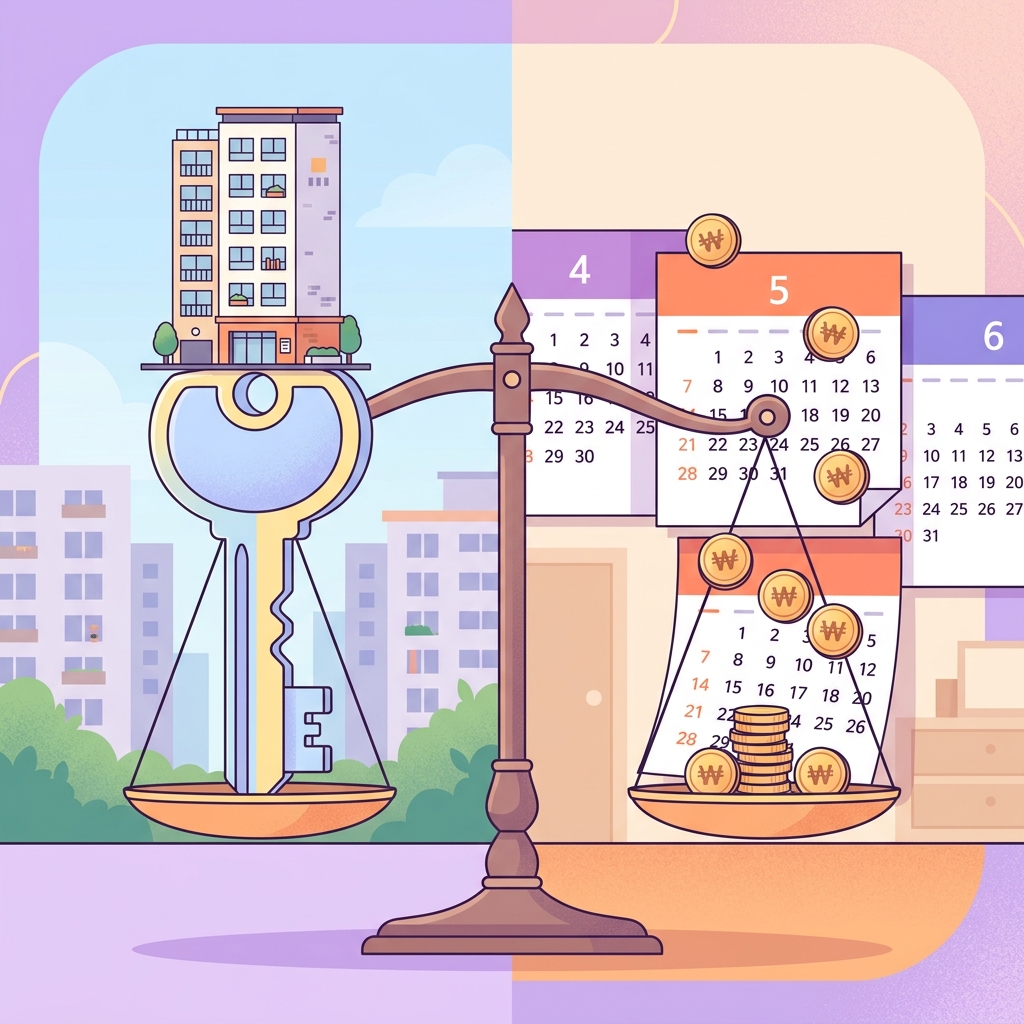
Korea has a rental system unlike most countries. Understanding the difference between Jeonse and Wolse is essential before you start looking for housing.
The Three Main Rental Types
| Type | Deposit Size | Monthly Rent | Best For |
|---|---|---|---|
| Jeonse (전세) | Very high (50–80% of property value) | None (maintenance fees only) | Long-term residents with savings |
| Wolse (월세) | Lower (varies) | Fixed monthly amount | Short-term or budget-conscious |
| Banjeonse (반전세) | Moderate | Reduced monthly amount | Middle-ground option |
How Jeonse Works
You provide a large lump-sum deposit — often tens of millions of won. You pay no monthly rent, only maintenance fees. When your contract ends (typically 2 years), the landlord returns your full deposit.
Advantages
- No monthly rent payments
- Full deposit returned at the end
- Lower total cost for long-term stays
Risks
- Very large upfront capital required
- Deposit at risk if the landlord cannot repay
- Jeonse fraud cases have increased in recent years
How Wolse Works
You pay a smaller deposit and a fixed monthly rent. The deposit and rent are often inversely related — a higher deposit means lower rent.
Protecting Your Deposit
The Housing Lease Protection Act (주택임대차보호법) protects your deposit if you complete three steps:
- Address registration — report your move-in at the community center or immigration office
- Fixed Date stamp — obtain a 확정일자 on your lease at the community center
- Physical occupancy — you must actually live in the unit
Which Should You Choose?
Choose Wolse if you are staying under 2 years, don’t have large savings, prefer lower risk, or want flexibility.
Consider Jeonse if you plan to stay 2+ years, have significant savings, and can properly verify the property and landlord.